
Understanding Neurodivergence and Masking: The Hidden Effort of Fitting In
Masking can feel like living with a dimmer switch turned down. Your true self is still shining underneath, just softened to fit in. For many neurodivergent people, including those with autism, ADHD, and other forms of neurodiversity, masking can serve as a short-term source of safety and belonging. Masking involves consciously or unconsciously hiding traits, stimming behaviors, or ways of thinking that might be perceived as unusual. It helps people navigate social expectations, avoid rejection, and protect against vulnerability in environments that may not yet feel accepting.
But while masking can be protective in the moment, it often comes at a cost. Over time, continually hiding parts of yourself can lead to emotional exhaustion, disconnection, and burnout. This blog explores what masking is, why it happens, and how caregivers and supports can help neurodivergent individuals feel safe turning their light back up.
What Masking Looks Like
Masking can take many forms, including:
Mimicking social behaviors such as making eye contact or mirroring gestures
Suppressing stimming behaviors like fidgeting or hand-flapping
Rehearsing conversations to appear more “typical”
Hiding challenges with attention, executive functioning, or sensory sensitivities
Why People Mask
Masking often arises from a desire to avoid judgment, bullying, or exclusion. From an early age, neurodivergent individuals may receive feedback that their natural behaviors are “wrong” or “awkward,” leading them to develop strategies to blend in. For some, masking can be a necessary coping mechanism, but for many, it becomes exhausting over time.
Why It’s Hard to Stop Masking
Even when people recognize how draining masking can be, it may feel uncomfortable or even scary to stop. Masking can become second nature after years of practice and self-protection. Many neurodivergent individuals worry about being misunderstood, rejected, or losing relationships if they begin showing more of their authentic selves.
Masking also serves an important short-term purpose. It can create a sense of safety by helping someone avoid vulnerability or emotional risk in environments that do not feel accepting. In moments where authenticity could invite criticism or harm, masking can be a protective shield that helps someone get through the day.
The challenge is that what starts as protection can become exhausting when used constantly. Over time, staying hidden can make it harder to feel seen, connected, and genuine. Unmasking takes time and gentleness. It is less about removing the mask completely and more about finding safe spaces where authenticity feels possible. Every step toward openness is an act of courage and self-trust.
What Masking Looks Like
Masking can take many forms, including:
• Mimicking social behaviors such as making eye contact or mirroring gestures
• Suppressing stimming behaviors like fidgeting or hand-flapping
• Rehearsing conversations to appear more “typical”
• Hiding challenges with attention, executive functioning, or sensory sensitivities
These are common examples of neurodivergent masking, often learned unconsciously over years of trying to adapt to expectations in school, work, or relationships.
Signs You Might Be Masking Without Realizing
Many neurodivergent people become so used to masking that it feels automatic. You might not even realize how often you’re doing it. Some common signs include:
• Feeling “on” or performative in social settings and exhausted afterward
• Replaying conversations or worrying about how you came across
• Adjusting your tone, expressions, or body language to match others
• Struggling to relax or act naturally around people outside your closest circle
• Needing long periods alone to recharge after social interactions
• Feeling unsure who you are when you’re not trying to fit in
Recognizing these patterns can be the first step toward greater self-awareness. Noticing when and where you mask can help you identify the environments that feel safe and those that require extra energy. Over time, creating neurodiversity-affirming spaces that welcome authenticity and celebrate individual differences can help reduce the need for masking and support long-term well-being.
The Cost of Masking
Consistently masking can contribute to stress, anxiety, depression, and burnout. The effort to constantly monitor and modify behavior can be mentally draining, leaving individuals feeling disconnected from their authentic selves. While masking can protect from vulnerability, it also serves as a barrier to allowing for genuine connection with others. If one is constantly masking around others, it prevents the opportunity for acceptance and authentic interactions. Many people only realize the extent of their masking later in life, often after experiencing prolonged stress or identity struggles.
Supporting Neurodivergent Individuals
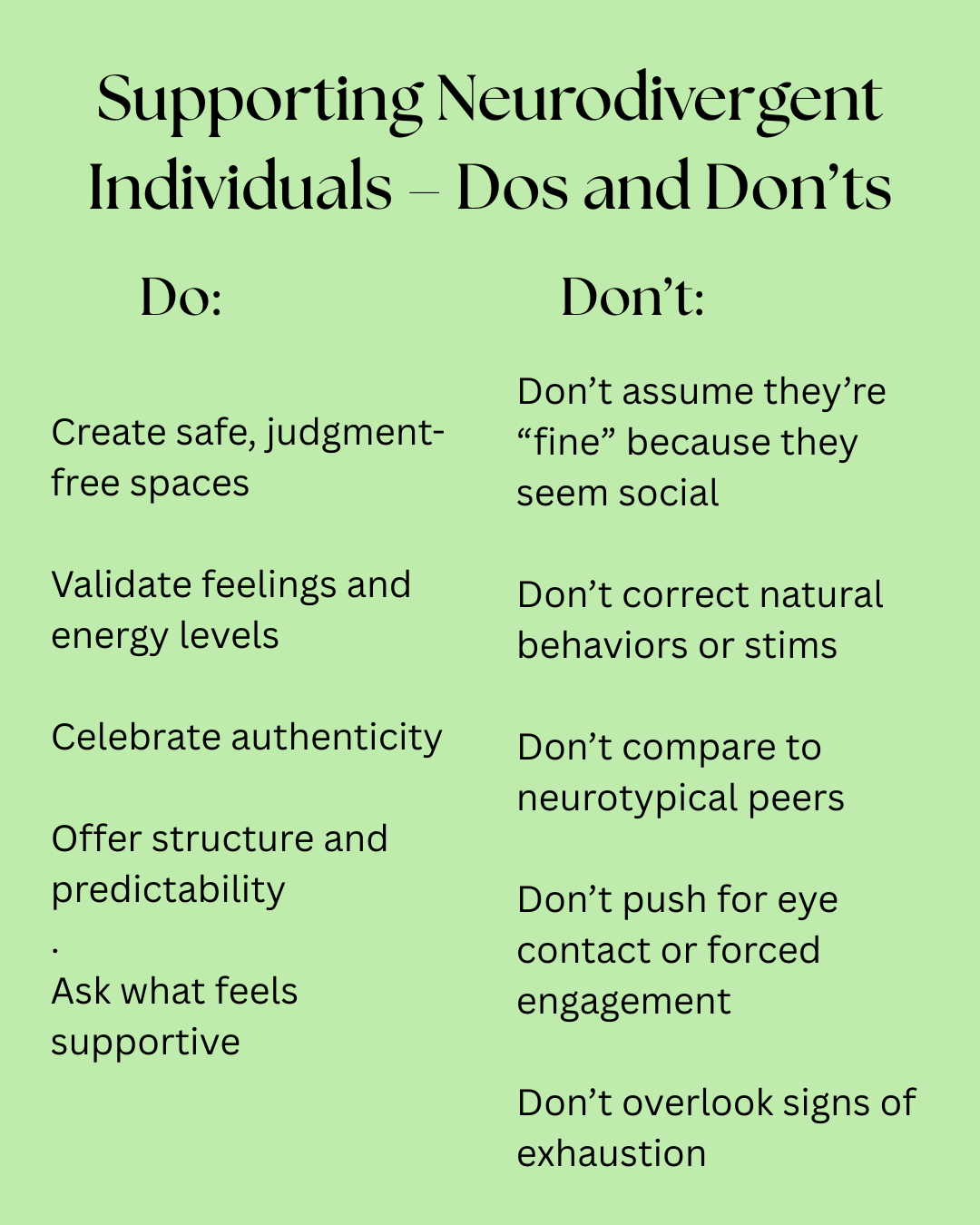
Caregivers, teachers, and loved ones play a key role in noticing signs of masking. Some indicators include:
Appearing unusually tired or irritable after social interactions
Spending excessive time preparing for conversations or social situations
Experiencing physical symptoms of stress such as headaches or stomachaches
Withdrawing from activities they previously enjoyed
Acting very different in public than in private settings
Supports can help by creating safe environments where neurodivergent individuals feel comfortable expressing themselves without judgment. Encouraging small acts of authenticity, validating emotions, and offering accommodations can reduce the pressure to mask. Practical ways to do this include checking in about how social situations feel, modeling acceptance of differences, celebrating efforts to be authentic, and providing predictable routines or spaces where the individual can relax and be themselves.
Signs of Healthy Self-Expression
Healthy self-expression looks different for everyone, but may include:
Comfort in engaging in natural behaviors without shame or self-consciousness
Openly sharing thoughts, feelings, and interests with supportive people
Using coping strategies that feel sustainable rather than exhausting
Feeling a sense of relief or satisfaction after social interactions instead of burnout
The Role of Therapy in Unmasking
Therapy can be a powerful space for learning to unmask safely. A neurodiversity-affirming therapist helps clients explore the emotions tied to masking, rebuild a sense of self, and create strategies for authentic living that balance comfort and safety.
In therapy, individuals can process the stress and burnout that often accompany long-term masking. They can also practice setting boundaries, identifying triggers, and reconnecting with parts of themselves that were once hidden. Unmasking is a gradual process, and therapy offers a compassionate and safe environment for that growth.
Practical Tips for Reducing Masking
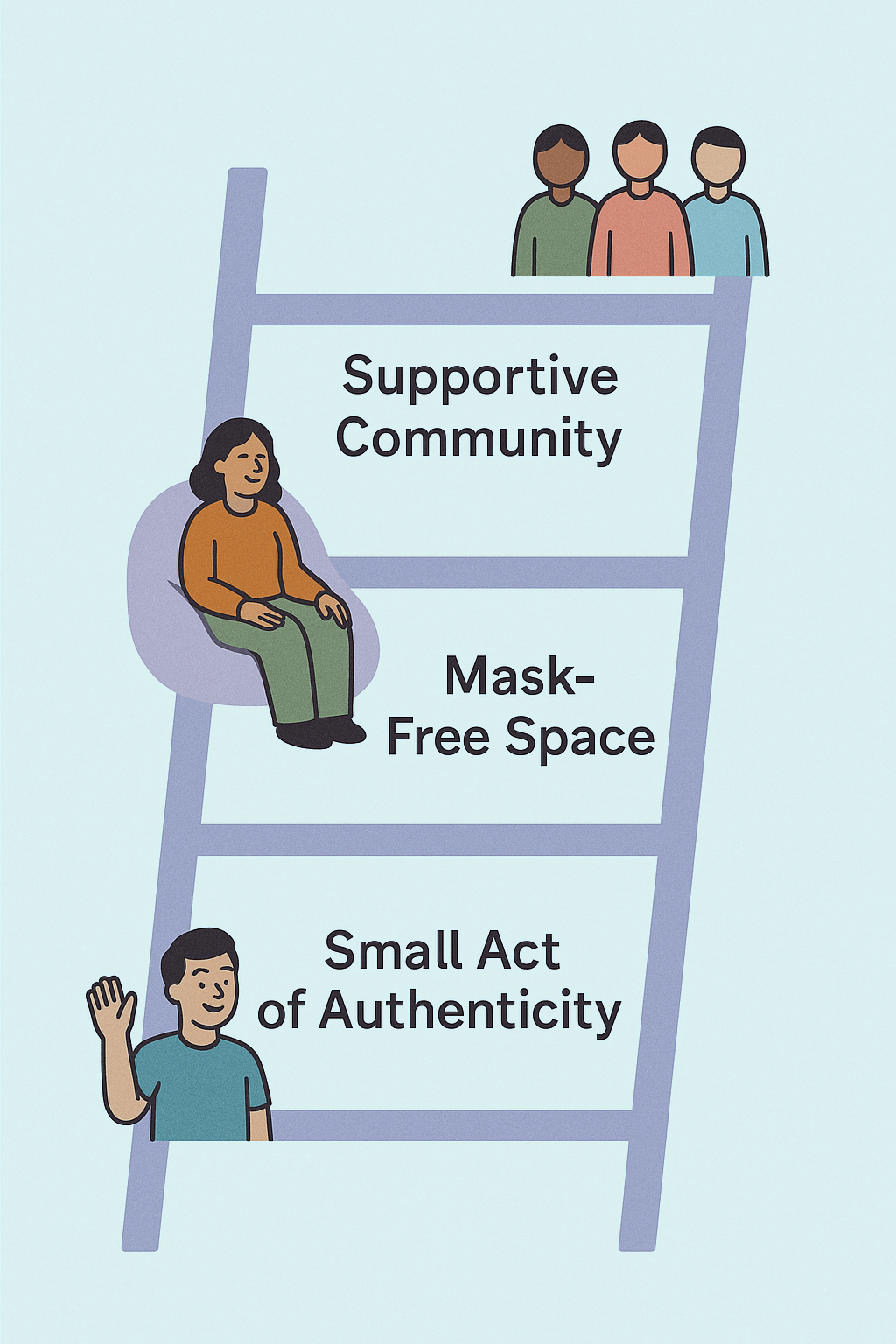
Individuals can take steps to reduce masking in daily life:
Practice small acts of authenticity, such as expressing a preference or opinion in safe settings
Create “mask-free” spaces at home, school, or work where authenticity is encouraged
Seek supportive communities where neurodivergent traits are accepted and valued
Set achievable goals for social interactions, gradually reducing the need to mask
Use mindfulness or self-affirmation to stay connected to personal feelings and needs
Embracing Neurodivergence
Awareness and acceptance of neurodivergence are crucial for reducing the pressure to mask. Environments that honor different ways of thinking, communicating, and interacting allow individuals to thrive without hiding who they are. Therapy, support groups, and advocacy can help neurodivergent individuals explore their authentic self, set boundaries, and practice self-compassion.
Moving Forward
If you notice yourself masking frequently, consider small steps toward authenticity:
Identify situations where masking is most intense
Allow yourself moments of natural behavior
Seek communities or relationships where you feel safe being yourself
Consider professional support to process the emotional impact of masking
Masking is a survival strategy, but it doesn’t have to define your life. For many neurodivergent individuals, masking has been a way to survive in a world that wasn’t built for them. Learning to unmask isn’t about flipping the lights on all at once, it’s about gently turning up the dimmer switch, one safe space and one act of authenticity at a time. With compassion, support, and self-acceptance, your true light can shine more freely, illuminating the best parts of you that’s always been there.